Showing posts with label SPRING.. Show all posts

Thursday, March 14, 2019

DILL CHICKEN SALAD with celery, apples, and sunflower seeds


Spring is in the air. And the ground. The snow is melting, the sun is shining, and thunderstorms grace the skies. It's a glorious time - my favorite in fact. Lately I've been craving chicken salad. Light yet substantial. Versatile and at the ready for park time, bike rides, and all the outdoor fun that comes with this season. Enjoy!

[THE RECIPE]

1 - 1.25 lbs chicken breast (I love Creswick Farms chicken), cut into large chunks or strips (2 15-oz cans of garbanzo beans to make vegan)
2 tablespoons of ghee or butter (avocado or algae oil for vegan)
sea salt and freshly ground pepper

1 cup celery, chopped into small chunks
2 small or 1 large sweet apple, chopped into small chunks
1/2 heaping cup of raw sunflower seeds
1 tablespoon of dried dill or 1/4 cup fresh dill leaves
1/2 cup vegenaise or mayonaise (I love Soy-Free Vegenaise or Chose Foods Avocado Oil Mayo)
Freshly ground pepper, to taste

In a large cast iron or stainless steel skillet, melt ghee or butter (or oil). Gently spread chicken (or garbanzo beans) out in pan and sprinkle with salt and pepper. Cook over medium heat for about 5 - 7 minutes. If using garbanzo beans in lieu of chicken, shake the pan over the burner from time to time to stir. When the pan side of the chicken begins to brown, flip and cook another 5-7 minutes until browned. Cut into a slice of chicken to make sure it is cooked all the way through. Turn off heat and let cool for 10 minutes.

While chicken cools, combine celery, apples, sunflower seeds, pepper, and dill in a large glass or stainless steel bowl. Mix well.

Chop the chicken into really small pieces (lightly crush garbanzo beans if using). Add the chicken and vegenaise/mayo and stir until all of the mixture is coated evenly. Serve immediately or store in refrigerator for up to a week.


Monday, May 7, 2018

TANGY NO-LEMON BERRY-ADE with goji berries, blueberries, and apple cider vinegar

I'm nuts about spring. I get straight up kooky-dooks for warm weather still tinged with a hint of cool, early morning light, asparagus and spring greens, and sun. Oh how glorious the sun.

That being said, spring also carries with it an absurd proliferation of pollen. Pollen turns some of us into red-nosed, bloodshot eyed, shattering sneeze wonders. Immune responders are on full alert, looking to extricate invaders using whatever means possible.

And so we adjust.

Over the years I've had to learn the art of flexibility when it comes to food. And for this girl, flexibility ain't easy. Not so much a fan of irony either but it seems that all things edible provide me a good, hard lesson in both. It's funny to me that foods are so vibrantly colored when they live in the land of grey area. There's no black and white when it comes to eating as much as certain people attempting to sell certain foods (or food plans) want desperately for you and I to believe. Life presents us with new and different and changing every day and it only makes sense that the essentials of life would tend to follow.

Which leads me to berry-ade. This spring I've taken a vested interest in reducing foods that elevate histamine levels. My tastebuds, on the other hand, have taken a desperate interest in lemon/limeade. It could be the warmer days and elevated thirst or time spent digging in dirt but there's nothing like citrus on ice to quench a thirst. If you've googled histamine no-no's you'll find citrus there. On. Every. Single. List. Trust me I looked for the loophole. There's none.

With no bone to bite onto, we get creative.

Apple cider vinegar. Raw, unfiltered, and histamine...weeelllllll...it depends on where you look. Some reporters are purists and throw ACV right in the heap with all other vinegars (although some research shows it has antihistamine properties). Others set it on a pedestal as the one outlier (quoting said research). Which tells me this is the ideal case for personal exploration and experience.

And because I was desperate and thirsty, I strapped on my explorer suit and dove right in. If you deal with spring allergies you'll have to decide for yourself whether or not to give it a go, however if you're looking to add apple cider vinegar to your diet this is a really nice way to do it. You can google the benefits. That being said, ACV isn't for everyone and is, like everything else, not the cure-all. Taste, test, be curious and try. Learn to listen to your body by engaging in the conversation and taking time to notice. There's no quick-fix or short cut when it comes to understanding what keeps you tickin'. It takes attention, practice, patience and a good helping of go-with-the-flow. Challenges come with a gift though - immense growth. Now that's something to go a little nuts over.

Cheers!

[THE RECIPE]

1/2 cup of dried goji berries soaked in hot water
1/2 cup of blueberries, fresh or frozen
4 cups of water
3 - 5 tablespoons of raw, unfiltered apple cider vinegar
1/4 - 1/3 cup of raw, unfiltered honey

Place all in high-speed blender and blend to smooth. Pour mixture through a fine mesh strainer and compost or discard the pulp. Drink at room temperature or over ice. Enjoy!


Tuesday, March 20, 2018

AND THEN IT'S SPRING!


At the threshold of each seasonal transition my kids and I plod down to the storage room and rummage
through bins searching for a particular set of books. In June we dig for pages lined with sunshine and
beaches, in September the topics we seek are school and apples and harvest. December we hunt
snowflakes, christmas trees and colorful lights. And then comes March. March maybe holds the most
anticipation. Christmas has it’s obvious excitement but March has a charm all its own - spring. For
months we wait through ice and snow and all things winter. We enjoy the powder while longing for
green. We cuddle up by fires, warm liquid tucked between our hands and soak up the short days and
long rest. Then the month turns to three and we stretch out our limbs, open our hearts and turn to the
sun. “Awake!” our bodies cry. Take a deep breath, get outside and take in the joy that brings us
northerners to tears. And we do. When the thermometer hits fifty and the sun shines bright, we throw
open our windows, tuck our boots away and slip into our shorts as quickly as possible fueled by a
little fear that the warmth might not stay. We know better of course and yet we do it anyway. We
breathe into the spaces that have been hunched over, tight and playing defense and we exhale deeply.


And then it’s spring.


Julie Fogliano may have coined it first. Maybe not. Either way And Then It’s Spring maintains its
place at the top of the list as our favorite springtime book. It pulls at my heartstrings as it narrates
so aptly our journey through spring. The hope, the worry [Will it ever come? Will it stay?], the
preparation and finally the transformation. The more I ponder and observe the more I’m convinced
that spring is a mirror for the journey that unfolds within us. We step out in faith that something will
happen. We meditate, practice asana and pranayama, we eat well, learn and find our teachers. We
spread seeds and hope for rain. It doesn’t look promising at first, bleak even, and our path may be
filled with a mirage of change but we step anyway. We plant anyway. Fools play really. And then a
hum awakens within us. The hum feeding something but we’re not quite sure what. We trust it’s
important - a sign maybe or sweet song encouraging us to keep on. We do so with childlike glee.
Even if it snows a little, we’ve built up enough momentum to get us through. Change pulses through
our bodies and enlivens our minds. And still we wait, ears tuned and hearts ready.


This is spring. The push/pull, desperation and euphoria, beautiful anticipation of it all.


One of the things I find most helpful as the seasonal transition occurs is to stay grounded and balanced.
Spring draws dormate energy up as seeds spring to life and thrust skyward seeking the sun. Branches
transform from lifeless to budding and the wombs of creatures pulsate with expectancy. There’s a
vibrancy and beat about spring. It’s easy to lose our feet and sail to space. Couple this with a body
sloughing off hibernation and the heaviness of winter, we can quickly find ourselves congested,
anxious, on edge. So we ground, we root and then we rise.


Below you’ll find a handful of practices to incorporate this spring. Based on Ayurveda or “the science
of life”, these suggestions are built on an ancient tradition rather than the here today, gone tomorrow
health culture we currently experience. My hope is they’ll help you set roots so your growth can be
anchored, enduring and alive with pleasure.


May you stay firmly rooted as your inner child dances with excitement and radiates the promise of
spring.


FIVE AYURVEDIC PRACTICES FOR SPRING


Dry Brushing
Dry brushing is exactly what it sounds like. Brushing your dry body. At first glance this may fall in
the kooky category but it’s a simple practice with immediate gratification. Dry brushing helps to
slough away dead skin while stimulating circulation and lymphatic movement. This practice is best
integrated into your morning routine as it is invigorating by nature. I love dry brushing because it’s
easy to incorporate, accessible and simple to do. For more information and detailed instructions
visit Joyful Belly, My New Roots or Banyan Botanicals. Note: If you have a significant vata
imbalance this practice may not be appropriate for you at this time. Skip ahead to the oil massage and
enjoy that while working with your diet and, if possible, an Ayurvedic professional to restore harmony.


Abhyanga or Oil Massage
The word “massage” may be enough enticement to give this one a try. One of the most balancing and
grounding practices Ayurveda has to offer, self-massage with oil truly connects you with the loving,
nurturing one within. It’s benefits are many: imparts muscle tone, lubricates the joints, increases
circulation, stimulates the internal organs, assists in detoxification, calms the nerves, deepens sleep
and on and on. Sunflower oil is a fantastic choice for the spring season as it’s one of the more neutral
oils. For instructions visit The Chopra Center or Banyan Botanicals.


Nettle
Traditionally known as the season of Kapha, early greens tend to be astringent for a reason. Mucus
has a way of building up over winter and spring invites a mass exodus of phlegm. If you’re no
stranger to the springtime sniffles, nettle may be a buddy to invite over to play. Nettle aids in
strengthening the nervous system, increases circulation, reduces inflammation and histamines, and
increases ojas (put very simply, the essence of assimilation). Purusha Ayurveda has a lovely overview
if you’d like to learn more. It’s worth noting that although nettle is beneficial for all three doshas, if
taken in excess an imbalance in vata may occur.


Food & Water
Spring ushers in an overwhelming urge to purge. We clean our homes, clean our cars and look to
switch up our diet. It’s tempting to hop on the pendulum and let it carry you away from the heavier
foods of winter on to singing the salad balad. The thing about transitions is that they are just that -
transitions. Moving from one extreme to other can be detrimental (think backbend to forward fold -
ouch!). I’ve found the best foods for seasonal shifts are simple, easy to digest and relatively bland.
Kichari/kitchari (traditional or soup), ghee, stewed fruit, seeds (pumpkin and sunflower), and cooked
root veggies offer balanced nutrition without creating stress for your digestive system. Specifically in
spring, the earth offers early growth like cilantro, stinging nettles, asparagus, ramps and leeks perfect
for gently clearing out stagnant mucus. When choosing food think warm, light and easy to digest, just
like the season itself.  


And then there’s water. I can’t emphasize strongly enough the importance of drinking pure water. For
a more in depth look at water check out Joyful Belly. Dr. Vasant Lad recommends Ayurvedic Gatorade
to increase the proper absorption of the water we do drink. Spring may be a nice time to add a splash
of apple or pomegranate juice to aid in the dispersal of excess mucous. I will also add that slightly
warmed water is ideal. I keep a pump thermos on the counter filled with warm water so it’s on hand
the whole day through.


Dr. Lad's Ayurvedic Gatorade
pinch of raw sugar, honey or maple syrup
pinch of salt
juice of one-half lime or seasonally appropriate juice (optional)
1 cup water
Mix the sweetener, salt and water together until well blended. Add the juice and mix again.


Bare your Feet


As soon as it’s warm enough, throw off your shoes, spread your toes, sink your heels into the earth
and walk barefoot in the grass. Listing here all the benefits may be helpful but in my experience
there’s no substitute for trying it yourself and letting your own participation speak. Walk slow, feel
fully, breathe deeply.


Peace to you, peace to all.

Namaste.

Wednesday, May 3, 2017

CARROT SALAD with garbanzos and chili-lime dressing


This is a recipe born out of my desire to enjoy one of my favorite restaurant's salads at leisure. I find it to be a great spring go-to. Light and fresh yet maintaining a certain kind of density that is satisfying without dropping like a boulder in the gut. The best part? It get's better with age. Make the full batch as shown below and enjoy all week. Play with different ways to garnish and test a few base grains. Take it outside, sit in the grass and soak up all the earth has to offer.

May spring fill you with random creativity and the feeling of being fully alive.

Peace.

[THE RECIPE]

20 medium to large carrots, peeled and thin-sliced at a diagonal
15-ounce can of garbanzo beans [I love Eden brand] or 2 cups homemade
1/2 red onion, cut in half and finely sliced
6 radishes, cut in half and finely sliced
1 heaping tablespoon ghee or avocado oil
sea salt
ground pepper

Bring to boil a medium size pot of water. Add sliced carrots and blanch for two minutes. Eliminate heat, pour carrots into a strainer over sink, and rinse with very cold water. Let sit for 5 - 10 minutes to allow water to fully drain.

Meanwhile, dump garbanzo beans into a fine mesh strainer and rinse well with cold water over sink. Shake to remove any remaining water. Heat 1 heaping tablespoon of ghee or avocado oil in a large skillet or frying pan. When hot but not smoking, carefully add garbanzo beans and sprinkle with salt and pepper. Shake pan frequently to stir. Sauté for 3 - 5 minutes or until beans just begin to show golden brown. Remove from heat and let cool in pan for a few minutes.

Place carrots, sautéed beans, onion, and radishes. Gently mix with wooden spoon. Add half of the dressing and stir until dressing thoroughly coats the vegetables. Taste and add more dressing as needed.

For best results, make a day in advance and refrigerate over night. Serve room temperature over a bed of rice or quinoa and garnish with toasted almonds, fresh cilantro or parsley, avocado, and remaining dressing.

For the Dressing:

1/4 cup maple syrup [more to taste]
juice of 4 limes
2 - 3 teaspoons of chili powder
1 teaspoon cumin powder
1 teaspoon garlic, minced
salt, to taste [start with 1/2 teaspoon and add as needed]
ground pepper, to taste
1 loosely packed cup fresh cilantro leaves
3/4 - 1 cup avocado oil or olive oil

Place all ingredients except oil and cilantro in a blender or medium size glass jar with tight fitting lid. Blend on low-medium to combine or shake well for 1 - 2 minutes. If using blender, turn on low and slowly drizzle oil into blender container until dressing begins to thicken. Dressing consistency should be more than watery yet not thick. Add cilantro and blend on medium-low to combine. Cilantro should look like small flakes. If your using a glass jar, add oil and shake for 2 minutes until dressing thickens. Add finely chopped cilantro and shake once more.

Wednesday, April 8, 2015

[MEAT]ING OUR BODIES WHERE THEY'RE AT + SPRING QUINOA SALAD WITH LAMB MEATBALLS

About this time two years ago, my body started poking at me, giving gentle nudges and indications that something wasn't quite right. I was aware of the issues but at the time in survival mode - processing through the aftermath of a house fire, a baby who wouldn't sleep more than 3 hours each night, and a number of other things my family found ourselves in the middle of. Looking back on it now I easily see the progression, but in the moment my life was lived minute by minute. Over that year things very quickly spiraled downward and my body simply stopped accepting the foods I was eating regularly. I knew there was a problem, yet the healing tools in my arsenal and the very minimal energy I had in the storehouse just wasn't enough. At some point I realized this was more than I could manage on my own. Both conventional and functional medical systems were stumped. Tests were run, procedures done, nothing found. Frustration and desperation overload.

Eventually I was existing on quinoa and a small handful of vegetables my body could digest. I needed more. Clearly.

I had eaten meat-free for a number of years beginning in college. I felt good and didn't crave meat so I figured, hey!, this must be my groove. What I neglected to consider is that my body didn't have one mode - a setting I could figure out, click into, and cruise on throughout life. I understand now my body changes from day to day, week to week, month to month, year to year, season to season. I consistently hear [and say] as a parent everything is a phase - nothing lasts forever. It's true for parenthood, for our bodies, and for life.

While I was pregnant with my first child my body screamed for burgers and bacon and cheese. Rather than finding the best version of these I could, I quieted the voice with what I assumed to be "healthier" choices. When my second came around that same voice upped the volume yet my stubbornness and head knowledge took over, convincing me once again this inner voice was somehow incorrect. It couldn't really be asking me to eat meat, right?

Although both babies were healthy [so much gratitude for this!], I came away exhausted, depleted, and malnourished. My body stopped receiving the nutrients from the food I was feeding it and I was feeling every bit of the effect.

And so I started eating meat. There are oodles of books on animal cruelty and the detriment of eating meat with extremely convincing scientific studies. I don't doubt the validity in this way of thought and I do believe as a nation we eat far too much tragically raised animal products on a regular basis. What I do doubt is that a meat-free way of eating is feasible for all. The Ayurvedic tradition uses meat as medicine and I love this. I love that meat holds a respected place in this system which also values animal rights, care, and protection. 

So I ate - minimally at first but then with a vengeance. Let me make this very clear, meat wasn't the only thing that healed my body. Healing took a lot of work on many levels and continues to do so. I have been so blessed by the skillfulness, kindness and knowledge of a naturopath, body/energy worker, and acupuncturist and most of my healing is a direct result of the work I've done with each. But meat did act as a catalyst. Eating meat taught me grace, humility, and a different form of ahimsa [non-harming] than I had been practicing. 

And it gave me hope. Something I desperately needed at that time.

These days, meat is still a part of my diet but it plays a far less prominent role. I rely more on gelatin and bone broth and have been able to slowly bring back some of my favorite meat-free staples. My forage into consuming animals has shown me balance and perspective are two things worth making friends with and practicing as much as possible. It's not easy, especially that perspective thing, but it provides the ability to understand situations in a way tunnel-vision simply doesn't allow.

Most importantly I've learned it takes a community. It takes a group of people to help each of us live well, heal well, and offer us the love and grace to learn the tough, uncomfortable lessons of life.

My hope is that this part of my story encourages you in yours and extends permission to explore releasing the areas of life you grasp so tightly. Many blessings.


[THE RECIPE]
Recipe adapted from this Killer Quinoa Salad Recipe

2 c. quinoa
4 c. cold water
1/2 tsp. sea salt
zest and juice of one lemon
2 T. raw apple cider vinegar
1/2 tsp. ground cumin
1/2 tsp. ground coriander
sea salt + freshly ground pepper
4 T. extra virgin olive oil
3 medium yellow onions, cut into very thin slices
5 - 6 small garlic gloves or 3 large cloves, cut into very thin slices
1 bunch of kale cut into very thin ribbon-like strips
2 c. or one 15-ounce can of cooked garbanzo beans
2 fresh green onions, cut into thin slices
1/3 c. dried cranberries
1/3 c. sliced almonds, lightly browned or toasted

Begin by warming 2 tablespoons of olive oil and onions in a medium size skillet over medium-low heat. Once the onions begin to sizzle, reduce the heat to low. Carmelizing the onions will take about 45 minutes so it's important to begin with this. Occasionally stir the onions to prevent them from getting too brown. At about the 30 minute mark, add the slivered garlic to the onions. Continue to stir occasionally until the onions are a deep golden color and very soft. Remove from heat and set aside to cool.

While the onions cooks, place the quinoa in a fine mesh strainer and rinse under cold water until the water runs clear. Put the rinsed quinoa into a medium size pot and add water and 1/2 tsp. sea salt. Bring the water to boil, reduce the heat low, and cover. Cook until all of the liquid has been absorbed [about 15 minutes]. Once the water has been absorbed, turn off the heat and remove the lid. gently fluff the quinoa in the pot with a fork every 10 minutes or so until the quinoa has cooled to room temperature. If you're short on time simply spread the cooked quinoa out onto a couple rimmed baking pans to cool.

While the onions and quinoa are cooking, mix the lemon juice, lemon zest, apple cider vinegar, cumin, coriander, and a pinch or two of salt and pepper in a small glass jar with a tight fitting lid . Secure the lid tightly and shake for 30 seconds. Place dressing in refrigerator.

Place 2 T. olive oil and the cut kale into a large skillet over medium-low heat. Stir frequently until the kale becomes soft and turns a bright green color. Add the garbanzo beans, saute for 1 minute or just enough to warm, remove from heat and set aside to cool.

Once the onions, kale and quinoa have cooled to room temperature, place the quinoa, onions, kale and garbanzo beans in a large glass bowl. Add green onions, cranberries, and slivered almonds [if using] and gently stir to combine. Drizzle the entire salad with dressing and carefully stir well to combine.

Serve immediately or refrigerate. Salad will keep for 1 week or you can freeze to enjoy later.


[LAMB MEATBALLS]
Makes approximately 15 meatballs

A special note: In eating meat, I think it's extremely important to mention my family and I try hard to support our local farmers who raise animals in a respectful, loving way. We bless the animals blessing us and we've chosen not to consume the meat of any animal who has suffered through a heartbreaking life. We believe eating meat is both a privilege and a responsibility - something to be taken seriously and done with great care. This can be done by choosing local, organic, pasture-raised meats, eggs, and dairy without added chemicals, hormones, or antibiotics. Better yet, make a visit to the farm you purchase your meat from. See how they raise the animals and get a sense of the heart of the farmer. You may just land yourself a friend in the process. 

1 lb. organic, pasture-raised ground lamb
1 T. extra virgin olive oil
1/4 c. fresh cilantro, finely chopped [if using dry cumin and coriander] OR fresh parsley, finely             chopped [if using dry parsley and oregano]
1 tsp. each cumin and coriander OR parsley and oregano
1/2 tsp. garlic powder
1/2 tsp. onion powder
1/2 tsp. sea salt
freshly ground pepper

Combine all of the ingredients in a medium-size glass bowl and mix well using a spoon or your hands. Form into small meatballs and place in a glass baking dish. Cover and refrigerate for 30 - 60 minutes.

Preheat oven to 375 degrees. Place meat balls on a parchment paper lined baking sheet and bake for 10 to 15 minutes or until the inside of the meatballs are no longer pink.

Remove from the oven and serve immediately.

[HERB YOGURT SAUCE]

1 c. plain Greek yogurt or unsweetened dairy-free yogurt of choice
1/2 lemon, juiced
1/2 c. fresh cilantro or dill, chopped finely
1/4 tsp. garlic powder
1/4 tsp. onion powder
sea salt and freshly ground pepper, to taste

Place all ingredients in a glass bowl and mix well. Taste and adjust as you need. Cover with a secure fitting lid and refrigerate for 30 - 60 minutes or make the night before.





Friday, April 3, 2015

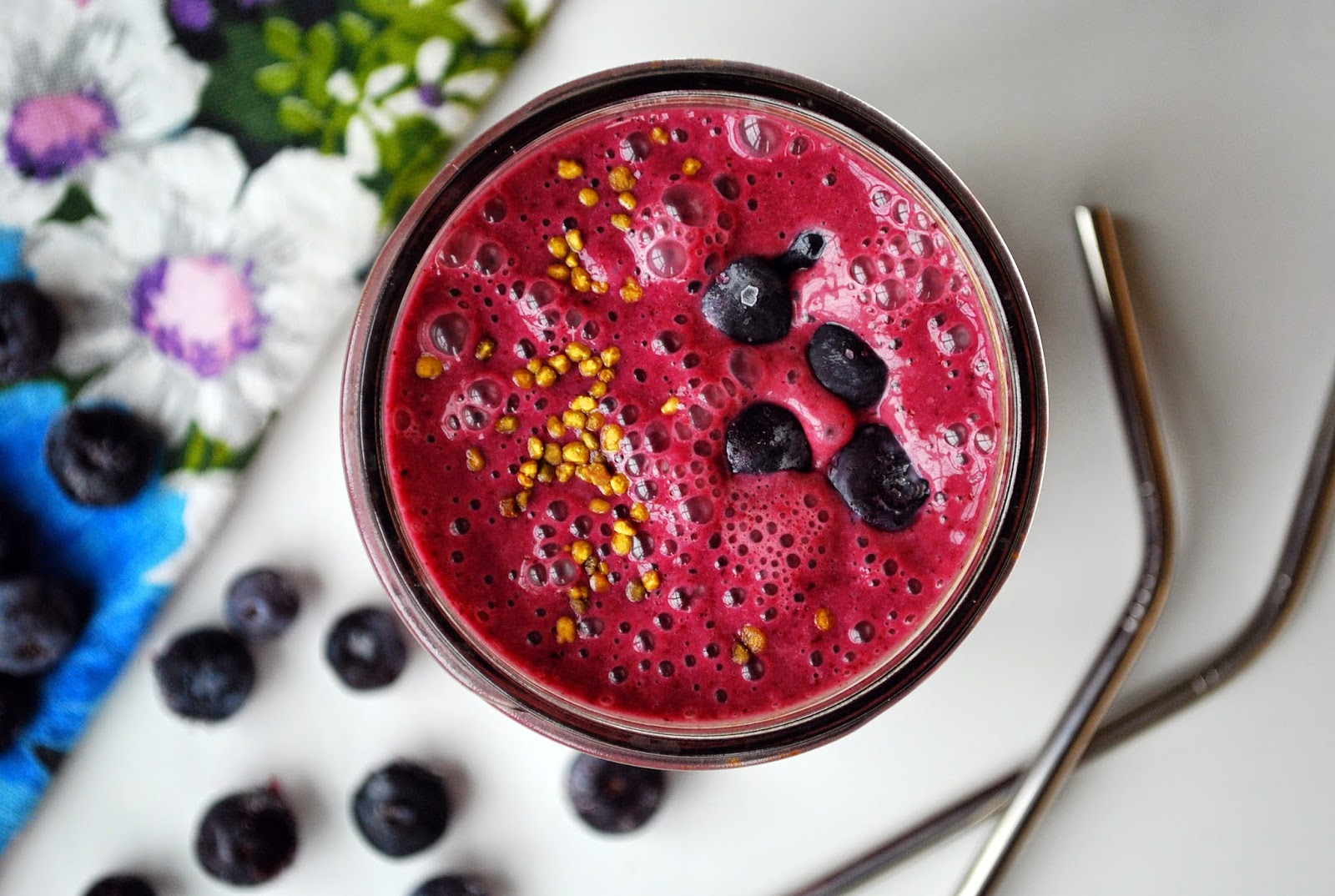
CARDAMOM-SPICED WARM BLUEBERRY SMOOTHIE

Today I had a serious hankering for a smoothie, a treat I haven't enjoyed in quite some time. Something in me was begging for smooth and creamy yet light. Sweet with a little tang. Yet in the same moment I wanted that thing to be nourishingly warm. Spring has only recently arrived at my doorstep and on this cool, overcast April day my body was beginning to transition into the new season yet the winter chill hadn't completely passed.

I spent the few precious minutes I have while my kids rest fully absorbed in a new cookbook that happened upon my doorstep this morning. Truly inspired, I headed into the kitchen for a scavenger hunt and a little play time all in an effort to fulfill my body's gentle demand. My pantry didn't disappoint and from there I give you this recipe: creamy, warm, sweet and tangy, with a hint of the pulsing energy so clearly felt outside my door.

[A BIT ABOUT POLLEN, SANG, AND MACA]

If you're unfamiliar with bee pollen, I hope you give it a chance. It's rich in antioxidants, contains almost every nutrient the body needs to survive, has an impressive protein content, and a subtle floral taste.

Ginseng or "sang" is commonly used as a preventative herb and balancing tonic that really aids the entire body. Asian ginseng builds heat in the body [great for fall - early spring] while American ginseng has a cooling effect [good for summer]. Ginseng can be very restorative if used over a long period of time. That being said, wild American ginseng is considered an at risk species so it's really important to find organically cultivated or woods-grown ginseng.  

Maca is a wonderful source of minerals, essential fatty acids, sterols, fats, fiber, carbs, protein, and amino acids. I think it's sort of malty in flavor making it a no-brainer addition to smoothies.

[THE RECIPE]
Serves 2

1 c. frozen blueberries
1 c. milk of choice
1 c. apple, pear, or pineapple juice
2 tsp. freshly squeezed lemon juice
2 T. maple syrup
pinch cardamom
1/2 avocado
1 T. extra virgin coconut oil
1 tsp. maca powder
1 tsp. bee pollen
1/2 tsp. ginseng powder

Combine blueberries, milk, juice, lemon juice, syrup, and cardamom in a small saucepan and heat over medium-low heat until blueberries are soft and liquid is warm.

While the blueberries are heating, place avocado, oil, powders, and pollen in a blender.

Pour warm blueberries with liquid into the blender and blend on high until very smooth.

Serve immediately.

Friday, March 20, 2015

SPRING FIRST LAYERED JELL-O GUMMIES

Happy Spring First!

What, might you ask, is Spring First?

Well, it's the first day of spring of course! And the perfect day to celebrate.

In our home, my girls look for any and every reason to have a party, maybe receive some presents, and celebrate all day long. We make a big deal of absolutely every holiday and throw in a couple made up ones as well.

Today is such day. After giving a nod to Franklin the Turtle [from whom we were inspired], we got right down to the business of par-ttt-yyyy-ing!

Waffles? Check. Potatoes? Check. Bubbles? Check. Chalk? Check. Layered spring-inspired Jell-O? Check. Grandparents? Check and check. And this only takes us to 11am. The day sort of unfolds as it will as we follow our present desires and dreams for what this holiday should hold. No planning. No fuss.

Our only rules?

Simple, smiles, and sunshine [the sunshine being negotiable].

Here's the thing about made up holidays: they give the present a special magic and adventure. A normal day becomes anything but normal, yet it's the normalcy that makes it so wonderful.

So take a day, make it a holiday, and celebrate like you really, really mean it. Do whatever comes to mind and don't think about anything else. Go outside and play like a child or drive to the beach or find some swings.

Whatever you do, smile because you're making normal so very beautiful.

Happy Spring First everyone!

[THE RECIPE]

Note: We like our jell-o a little on the tart side but if you prefer sweet [for picky eaters this may be helpful], feel free to add maple syrup or honey as desired.

To begin, prepare an 8 x 8 inch glass baking dish by rubbing a thin coat of coconut oil along the entire inside of the pan to grease. Set aside.

I warm all of the layers in separate pans at the same time prior to pouring into the baking dish but it also works to get the first two layers prepared, pour one into the pan to chill, and start working on the third and fourth layers.

If you don't have the fruit I've listed on hand, simply sub in any other fruits. Mango, and blackberries, strawberries all work well. The only fruit to avoid is pineapple as it reacts with the gelatin resulting in mush.

First Layer:

2 c. frozen blueberries
1/2 c. cranberry juice
1/2 freshly squeezed lemon juice
pinch sea salt
maple syrup [optional], to taste
7 T. gelatin powder

In a medium size saucepan over medium-low heat, combine berries, juice, lemon juice, salt, and syrup if using. Cook until warm and berries are have soften just a bit. Turn off heat and pour berry mixture into a blender. Blend on low. While the blender is running, slowly add gelatin powder. Replace the blender top and blend on high until mixture becomes creamy and smooth. Pour mixture into the prepared 8 x 8 inch baking dish and place in the freezer for about 10 - 15 minutes or until just firm but not hard.

Second Layer:

1 c. Tigernut or coconut milk
1 T. vanilla extract
3 - 4 T. maple syrup
1/2 - 1 T. lucuma powder [optional, this adds a malt-like flavor]
pinch sea salt

In a medium size saucepan over medium-low heat, combine milk, vanilla, lucuma powder, salt, and syrup. Cook to warm. Turn off heat and pour mixture into a blender. Blend on low. While the blender is running, slowly add gelatin powder. Replace the blender top and blend on high until mixture becomes creamy and smooth. Pour mixture evenly over the first layer and return to the freezer for about 10 - 15 minutes or until just firm but not hard.

Third Layer:

2 c. frozen raspberries
1/2 c. pear juice
maple syrup [optional], to taste
7 T. gelatin powder

In a medium size saucepan over medium-low heat, combine berries, juice, and syrup if using. Cook until warm and berries are have soften just a bit. Turn off heat and pour berry mixture into a blender. Blend on low. If you'd like to remove the seeds, pour the mixture through a fine mesh strainer using a spoon to gently push it through. Rinse out the blender and return the raspberry puree to the blender. While the blender is running, slowly add gelatin powder. Replace the blender top and blend on high until mixture becomes creamy and smooth. Pour mixture over the first two layers and return to the freezer for about 10 - 15 minutes or until just firm but not hard.

Fourth Layer:

2 c. frozen apricots
1/2 c. apricot juice
maple syrup [optional], to taste
7 T. gelatin powder

In a medium size saucepan over medium-low heat, combine apricots, juice, and syrup if using. Cook until warm and apricots are have soften just a bit. Turn off heat and pour apricot mixture into a blender. Blend on low. While the blender is running, slowly add gelatin powder. Replace the blender top and blend on high until mixture becomes creamy and smooth. Pour mixture over the first three layers and either return to the freezer to firm completely [about 20 minutes] or place in the refrigerator for 1 - 2 hours.

When the jell-o is completely firm, cut it into small squares using a sharp knife. Gently pull from the pan and tear apart where needed. Store in a tightly sealed glass container in the refrigerator for 1 - 2 weeks.

Wednesday, July 23, 2014

GREEN SOUP WITH ASPARAGUS, LEEKS AND HERBS

 It's been a while! Here is one of my favorite soups this year. I love it for breakfast [try before you dismiss!]. For me and my body type, soups or cooked veggies in the morning provides a warm, nourishing, and grounding way to start the day. It's also a fantastic simple dinner - light and easy to digest. You can bulk it up by adding any or all of the garnish options listed below or serve it along side a small salad.

[THE RECIPE]

4 c. fresh or frozen asparagus [depending on the season you could also try green beans + zucchini in place of the asparagus or just use extra fresh or frozen greens like kale, spinach or chard], chopped or broken into 2-inch pieces
4 c. fresh or one small bag of frozen kale or spinach, chopped
3 large or 4 medium leeks, rinsed and sliced
2 large fennel bulb, rinsed and sliced, or 2 tsp. whole fennel seeds [or an extra leek in place of the fennel]
2 - 3 large garlic cloves, minced or sliced
1 - 2 T. ghee or coconut oil
sea salt and freshly ground pepper, to taste
4 c. bone broth, broth of choice, or water [I really like 2 c. lamb, chicken, or turkey broth + 2 c. vegetable broth]
6 c. water
2 T. dried fennel seeds
2 large bunches of fresh basil and/or parsley or 1 c. herb dressing
one large handful fresh dill leaves or 1 T. dried

In a dutch oven or large pot, warm ghee or oil over medium heat. Add cut fennel and leeks. Saute over medium-low heat until leeks begin to look transparent and fennel is soft [about 7 - 10 minutes]. Add garlic cloves and fennel seeds if using and saute for an additional 3 - 5 minutes or until fragrant. Season with a bit of salt and pepper, add asparagus, kale or greens, water and broth, stir, cover, and bring to boil. Reduce heat to simmer and cook for 10 minutes or until asparagus is bright green and soft. Stir occasionally. Remove from heat and stir in herbs [basil, dill, and/or parsley]. Carefully blend using an immersion blender or place in blender and blend in batches until very smooth. Return to pot. Garnish as desired. Enjoy!

Garnish Options: coconut kefir [recipe to come soon!], nut / seed milk of choice, toasted walnuts, goat cheese, cooked quinoa, cut avocado, finely sliced basil leaves


Tuesday, June 4, 2013

GARDEN POTATO SALAD

Dinner time tends to be a bit hectic in my family. It typically begins with my husband walking through the door, welcomed by "aaaahhhhhhh!!!!!" [and other excited baby babble] and "Hey Dad! Look at this!" from the two-year old as I am working [sometimes frantically] my way through dinner prep. After a quick change from work to relax clothes we gather around the table, my daughter says a prayer [possibly the best part of my day, especially now that she improvs], and within minutes hear "all done, I'm ready to play". We attempt some quick conversation hoping to catch up on the day, finish the meal, and before I know it what should be a sacred time of family bonding has been overcome by trying to get food in our bellies before the next demand. Just like that we're on to play time, clean up, bed-prep, bedtime, post-kid work, and off to bed ourselves.

And then, the other day, everything changed.

Rather than business as usual, we grabbed our picnic trays, carried our meals down to the patio overlooking the pond, and gathered under the umbrella in the late afternoon sun. When my daughter declared done, we set her down to roam the flowers, look at bugs, and ponder a variety of things that caught her eye. We sank into our chairs, ate slow, talked and listened, and lingered at the table laughing at our daughter's antics and our own ridiculous jokes. We talked about our day, reflected on things we had learned, and for moments simply sat in the silence taking in the sounds of a little girl's laughter, a baby's coos, the songs of birds, and a bullfrog calling out here and there.

It was beautiful.

So the next evening we did it again.

And it too was beautiful.

What I realized was, once we removed the distractions that the walls of our home contain, we were set free to just be. To enjoy the company of those around us without seeing the dishes, the clean up, the toys, the phone, and all of the other things that easily pull us away from the table and time as a family. Nature has a way of coaxing us to sit and stay. To slow down and take in the blessing and beauty that surrounds us everyday.

Being outdoors pulls typical tasks from mundane to magical. Exactly what was intended, I think.

And so, tonight, we will do it again.

We'll grab our picnic trays, hoist the baby on our hip, and trek down the stairs to the patio to sit and eat and talk and laugh and watch and listen.

And I imagine it will be beautiful.

May you find a way to pull your family or your friends or yourself outside for a meal. May you put aside the work and the hassles and the time and simply be.

And may you be so blessed by the beauty you find when you do.

[THE RECIPE]

Special Note: Although cucumbers are not in season quite yet, many farmers have greenhouse cucumbers that they bring to the Farmer's Market beginning in late spring. Hunt down your nearest market and you might just be pleasantly surprised what you will find! Take liberties with this recipe and adjust the salad throughout the season, using summer squashes and cherry tomatoes in summer, root veggies in winter, and loads of spring greens in the spring. To make it a fruit salad, sub the veggies for fruit, parlsey and chives for mint, mustard for honey or maple syrup, olive oil for walnut oil, and add just a touch of salt.

For the dressing:

1/2 c. cashews, soaked* or sunflower seeds
pure water to cover cashews
2 T. raw apple cider vinegar
1 - 2 tsp. Dijon mustard
1/8 c. extra virgin olive oil
sea salt to taste

Place soaked cashews* in a high speed blender and pour in water, enough to just cover the cashews. Add remaining ingredients and blend on high until very smooth. The consistency should be just in between runny and thick. Add a little more water if it is too thick or more oil if it is too thin. Refrigerate until ready for use.

*To soak cashews either place nuts in a glass jar, cover with double the water, and refrigerate overnight or place nuts in a glass jar, cover with double the boiling water, and soak for 10 - 15 minutes.

For the salad:

4 - 6 large potatoes, peeled and cubed
1 bunch of radishes [about 6], rinsed and finely chopped
1/2 - 1 cucumber, rinsed and cut into small pieces
1 large carrot, peeled and finely chopped
handful of green beans [if frozen, steam until just warm], cut into 1/2-inch pieces
fresh parsley, finely minced
fresh chives, finely minced
pinch or two of smoked paprika [regular paprika is fine here as well]
sea salt to taste

Place prepared potatoes in a steam basket and steam until just barely soft. Remove from heat. Add carrots to the top of the potatoes and cover to stand over residual steam [no heat necessary] for about 5 minutes. Once the carrots are just a touch soft [but still crunchy], place in a large bowl and set in refrigerator to cool [or freezer to speed up the process].

Once the potatoes and carrots are no longer hot [can still be a little warm], mix in remaining ingredients. Pour sauce over veggie mix and toss until salad is thoroughly covered.

Return to refrigerator to set for 15 - 20 minutes, allowing the flavors to meld together.

This is wonderful served with a side of sauteed asparagus.


Friday, May 24, 2013

DANDELION & 4-GREEN PASTA

This year we are resting our garden, a year of jubilee of sorts. The area we use to grow our goods has been worked, and pushed, and tilled, and faithful to us for around seven summers and we thought, as a way of saying thanks, we would allow it to rest. To just be. To gather steam and health and goodness for the next line of growing seasons.

This summer of celebration will hopefully allow us the time and space to do a couple things: re-design the garden, create more permanent raised beds, and feed the soil in a variety of ways [like compost and lasagna gardening - sounds delicious right?!].   

Taking a break from the seed starting, the watering, the weeding [although there is still a bit of weeding], the growing , the worrying, and all the other things that come with growing a garden has allowed me to notice the other edibles that surround where we live. What many view as weeds [myself included] are actually nutrient-dense, delicious foods that generally provide our bodies with exactly what we need when we need it. 

This inspired me to start a series of posts dedicated to these awesome edibles. To give you a little peak at what our yards and forests hold, how they can be used as both food and medicine, and hopefully inspire you to take a little walk around your yard with shovel and sheers in hand instead of the weed killer.

For each post, I'll give you the most common and recognizable name of each plant; parts of the plant used; whether the plant should be used externally, internally, or both; it's energies; medicinal uses and any precautions; and a recipe or two.

There are plenty of great herbal books out there should you choose to dive deeper [you can find a list of my favorites at the bottom of this post], so I will keep it short and simple here. 

May you walk outside with new eyes and a sense of adventure. May you find a bit of jubilee this season.

Special Note: Remember, whenever you are introducing your body to something new, educate yourself on what you are eating / using [especially if you have health issues / concerns]. Many of the herbs found here will be safe for most but each of us has a different composition and will respond to foods and herbs in our own unique way. 

[DANDELION: flower, leaves, roots]

Energy: [leaves] cool & bitter, [roots] cool, bitter, & sweet
Use: internal & external
For Infants & Children: Yes 
Precautions: some people may have an allergic reaction to the flowers and stems [generally those also allergic to chamomile and yarrow] - simply discontinue use if a rash occurs; should be avoided during antibiotic treatment; should be avoided if you have gallstones

Key Nutrients: vitamins A, B, C, and D; iron; potassium; calcium; magnesium; inulin; sesquiterpenes; carotenoids

Medicinal Uses: detoxification [one of the best liver decongestants and cleansers], blood purification and blood builder [one of the best available], aid for digestion, high vitamin and mineral content, enzyme balance, aids stomachaches, hepatitis, hypoglycemia, decreases blood pressure, anemia [again, one of the best], diuretic [especially for fluid retention], cystitis, nephritis, weight loss / appetite, energy and endurance, bladder infection, constipation, hemorrhoids, indigestion, IBS, gallstones, osteoporosis, good for reproductive organs, PMS, skin diseases / issues [acne, age spots, eczema, yellow jaundice], bodily restoration and rejuvination, cooling affect on the body

There is a reason this baby is tough to remove from your yard - all of those fighting, tenacious properties may be what make this plant such a nutritious food and powerful medicine.


Common Culinary Uses: salad greens, pasta, pesto, wilted and / or marinated greens, coffee substitute [roasted root], green drinks, wine, soups
[THE RECIPE: 4-GREEN PASTA]

1 package of gluten free pasta, spaghetti style
1/8 c. fresh mint, minced
1/4 c. fresh dandelion greens, washed / spun dry / cut into small strips
1/2 c. beet greens, cut into small strips
1/2 - 1 c. chard, cut into small strips
1/4 - 1/2 c. Everyday Vinaigrette [see recipe below]
1 - 2 T. dulse flakes
sea salt and pepper to taste

Cook pasta according to manufacturer instructions. While pasta is cooking, cut the greens and mix vinaigrette. When pasta is just soft [or al dente if you prefer], drain water and return pasta to pot. Quickly add vinaigrette and greens quickly tossing. Cover and let stand a few minutes to wilt the greens. Toss again. Add salt, pepper, and dulse flakes and stir well. Serve warm or cool.

This is really good served with Shaved Asparagus Salad [I half the dressing this recipe calls for because it is a bit too intense for my flavor. Start with a small amount of dressing and add until you've reached the flavor you desire. I also use Parma-Zaan in stead of Parmesan cheese].

[THE RECIPE: EVERYDAY VINAIGRETTE]
Recipe from Grow, Cook, Eat by Willi Galloway

In a pint size jar combine:

1/4 c. white wine vinegar
1/4 tsp. sea salt
1/2 tsp. honey or maple syrup
2 tsp. fine chopped shallot [optional]
2 tsp. Dijon mustard
1/3 c. chopped herbs
3/4 c. extra virgin olive oil

Cover tightly and shake vigorously for a minute or so. Store in refrigerator to keep longer and remove 5 - 10 minutes prior to use [oil will solidify over time].

You can also add fresh dandelion greens to this Caesar salad, green smoothie, spring detox tea, spring vegetable pasta salad, socca cakes - the options are endless!

[ADDITIONAL RESOURCES]

Hands On Healing Remedies by Stephanie Tourles
Medicinal Herbs by Rosemary Gladstar
Herbal Recipes for Vibrant Health by Rosemary Gladstar
The Way of Herbs by Michael Tierra
Prescription for Herbal Healing by Phyllis A. Balch
The How To Herb Book by Velma Keith & Monteen Gordon
Mother Earth Living Magazine's "All About Dandelions"


Friday, May 17, 2013

SPRING RISOTTO: 2 WAYS


Eating seasonally has many advantages [disease prevention, budget-friendly, healthy for body and planet, etc.] but one of the greatest is the anticipation that comes with spring.

My guess is many who take on the frozen tundra [otherwise known as Michigan or any other northern state] anticipate the melt of spring - the receding plow piles, the bit of green here and there, the buds and then blossoms, the daffodils and tulips and trilliums, a green horizon. Spring is all about re-birth, newness, a fresh start that even the concrete-bound cannot ignore.


But there is something even richer about orienting your diet around the change in weather. 

By aligning my diet with the season, I've experienced an anticipation for spring that is somehow deeper, more gut-felt. Everyone can feel spring in their skin but not all experience spring in there soul.

It makes a person slow down.

Way down.

Because we've waited all year for this.

We've come through winter for this.

There is the refusal to rush.

This is why I love risotto. In the same way waiting out winter causes me to pause and enjoy every bite of spring, risotto begs me to stop and feel every bit of cooking. It puts me in front of a warm stove on a chilly spring evening and then tells me to stay and stir. That's it. Stay and stir. Risotto doesn't demand. It isn't fussy. It rarely lets me down. It simply asks that I do two things really well: stay and stir.

May you find yourself at the stove with a counter full of spring and a soul bursting with thanks for the willingness to simply stay and stir.


[FIRST, A THING ABOUT RAMPS*]

Ramps are one of my favorite spring-time foods mainly because they have to be foraged. I feel a touch wild when I eat them, like I'm connecting to my hunter-gatherer side [although right now I depend on other hunters to gather]. They seem pure in the best, deepest sense. Untouched by our human hands. There is beauty in what we create and do and think up as humans [and of course danger] but there is also a lot of splendor in the simple, unchanged.

So it is with ramps. Ramps sit in the onion family. They're kind of like leek meets garlic and goes wild.

They are similar to onions, leeks, and garlic in medicinal benefits - antiviral, antifungal, antibacterial, anticarcinogenic and tonify the body, meaning they kind of work on that "stuck" feeling, the blahs if you will.

Essentially they are the best bang for your buck - tons of health benefits for the whole body. For free.

[THE RECIPE WITH ARBORIO RICE]

1/2 onion, chopped
2 T. extra virgin olive oil
2 - 4 cloves of garlic, minced

2 c. arborio rice

1 c. dry white wine or 1/4 c. white wine vinegar
6 - 8 c. of vegetable broth
1 bunch wild ramps*, chopped and separated white parts and green parts
1/3 c. chopped fresh parsley
4 - 6 c. of fresh spring greens [chard, spinach, arugula, kale]
salt and pepper to taste

Warm the oil over medium-high heat in a large pot. Add onion, ramp whites, and garlic. Stir occasionally until onion becomes translucent. In a separate pot, warm vegetable broth. Add rice to the onion, ramp whites, and garlic and stir continuously for a minute or so. Pour in white wine and stir continuously until the wine has almost evaporated completely. Now, add vegetable broth one cup at a time, waiting until each cup has evaporated before adding the next. Stir continuously. Mixture should bubble gently but not boil. Once you have worked through all of the broth [or reach the texture you desire], turn heat to low and add ramp greens, parsley, and spring greens. Stir until wilted and bright green. Season with salt and pepper to taste.


[THE RECIPE WITH BLACK RICE]

1/2 onion, chopped
2 T. extra virgin olive oil + 1 T.
2 cloves of garlic, minced
6 - 8 dried mushrooms, soaked to soften and then minced

1 1/2 c. black rice, rinsed and drained
1 c. dry white wine or 1/4 c. white wine vinegar

4 c. vegetable broth
2 - 4 c. water
1 - 2 T. dulse flakes [optional]
6 c. mix of chopped spinach, arugula, and kale
3 - 4 c. asparagus, cut into 1/2-inch pieces
sea salt and pepper, to taste


First, saute asparagus in 1 T. olive oil until bright green and tender but not soft. Set aside. Warm the oil over medium-high heat in a large pot. Add onion, mushrooms, and garlic. Stir occasionally until onion becomes translucent. In a separate pot, warm vegetable broth and 2 cups or water. Add rice to the onion, mushrooms, and garlic and stir continuously for a minute or so. Pour in white wine and stir continuously until the wine has almost evaporated completely. Now, add vegetable broth one cup at a time, waiting until each cup has evaporated before adding the next. Stir continuously. Mixture should bubble gently but not boil. Once you have worked through all of the broth [or reach the texture you desire], turn heat to low and add dulse flakes, spring greens, and sauteed asparagus. Stir until wilted and bright green. Season with salt and pepper to taste.